|
|
|
|
|
|
|
|

|
Don't Miss Any Special Deals - Sign Up To Our Newsletter!
| ||||||||||||||
| CLICK HERE FOR A FULL LIST OF ALL ANTHONY SAUNDERS PRINTS BY TITLE |
|
Anthony Saunders  Aircraft Directory Aircraft Directory  Lancaster Lancaster |
[UP] - Spitfire - Hurricane - Lancaster - Mosquito - Kittyhawk - Wellington - Sopwith Camel - Mustang - Flying Fortress - Thunderbolt - Me109 - He111 |
| Lancaster Aviation Prints by Anthony Saunders Aviation Prints |
|
|
|
|
|
|
|
|
|
|
|
| Text for the above items : |
Breaching the Möhne by Anthony Saunders. The Dambusters - Target X. Twenty minutes had passed and three Lancasters had attacked but there was still no sign of a breach in the Möhne Dam, the first of three primary targets for the newly-formed elite 617 Squadron under the command of Wg Cdr Guy Gibson. Gibson and Flt Lt 'Mick' Martin had made successful attacks but Flt Lt 'Hoppy' Hopgood, whose bomb bounced over the dam wall and exploded on the power station below, had been shot down by deadly flak. Now it was the turn of Sqn Ldr 'Dinghy' Young in Lancaster AJ-A. With Gibson and Martin heroically drawing enemy fire, Young's Upkeep 'bouncing bomb' was spot on target with Gibson later noting it made 'three good bounces' before detonating against the dam wall. It held but Gibson was feeling upbeat, he was sure he'd seen movement in the wall after the explosion and called up David Maltby to begin his attack. He, too, was successful, and just as Flt Lt David Shannon was about to begin his attack the dam disintegrated - the Möhne had finally been breached. 'There was a great breach 100 yards across' Gibson wrote later, 'and the water, looking like stirred porridge in the moonlight, was gushing out and rolling into the Ruhr valley...'. An hour later the Eder dam was also breached, but the operation was a costly, if stirring, success; of the nineteen Lancasters sent out from RAF Scampton, eight would never return; of the 56 aircrew aboard only two survived. To perpetuate the legend of the Dambusters, artist Anthony Saunders has once again created a stunning work depicting the scene at 'Target X' - the codename originally given to the Möhne dam. Always a master of his craft, Anthony portrays 'Dinghy' Young's Lancaster AJ-A as he clears the dam wall moments after releasing his bomb. On his starboard side Guy Gibson, navigation lights ablaze, heroically draws enemy fire whilst below Young, the inferno created by Hopgood's bomb lights up the sky. Printed onto borders that were personally signed over many years, each copy carries the authentic autographs of six highly-regarded veterans who took part in Operation Chastise on the night of 16 / 17 May 1943. Since signing, most have sadly passed away giving even greater meaning to this print release which provides both aviation art and Dambuster enthusiasts a remarkable collector's piece to be cherished. |
Berlin Boar Fight by Anthony Saunders. On the night of 23/24 August 1943, a lone Fw190 of the Luftwaffe's crack unit JG300 Wilde Sau, defiantly engages a force of RAF Lancasters in the heavily defended, flak-torn skies over Berlin. With the heavy bombers illuminated by bursting flak and the fires of the burning city below, the Luftwaffe pilot engages his target, just one of over 700 RAF long-range bombers thrown into the assault that night. It was the opening salvo to the Battle of Berlin, the long and bitter aerial offensive against Hitler's seat of power that would rage throughout the winter to follow. From November 1943 till March 1944 RAF Bomber Command would make 16 massed attacks on Berlin. When the battle was over, the capital of the Third Reich lay shattered and in ruin, but the crews of RAF Bomber Command had paid a heavy price - 492 aircraft failed to return. |
Lancaster Dawn by Anthony Saunders. Depicts a 103 squadron Lancaster returning from a night-time bombing mission. |
Last Long Shadow by Anthony Saunders. Lancaster CF-X (LM384) of 625 Squadron. On the Leipzig raid on the evening of 19th/20th February 1944 approx 47 Lancasters were shot down or failed to return, that is over 300 airmen. Lancaster CF-X (LM384) was taking part in the bombing raids that were a build up to the D-Day landings of June 1944. Leipzig was seen as a high value target due to its oil and synthetic fuel production. The Lancaster took off from Kelstern in Lincolnshire just before midnight. Unfortunately LM384 did not come back as was the case with many others - the aircraft was lost and crashed just outside the tiny village of Bledeln in Germany. The Pastor of the village, Herr Duncker, kept a diary throughout the war and has an account of the plane crash and the subsequent burial of the crew. All of the crew died in the crash except one - bomb aimer George Paterson who was interned in Stalag 357 Kopernikus. The rest of the crew were given a Christian burial and stayed there until the end of the war, when the war graves commission disinterred the crew and reburied them in the Hannover war cemetery. |
Pathway to the Ruhr by Anthony Saunders. The words from Air Vice-Marshal the Hon. Ralph Cochrane., newly appointed as AOC of No.5 Group, to the young Wing Commander were simple enough. I can't tell you the target he continued but you've got to fly low-level, on the deck, and at night. As far as aircrews are concerned, I want the best - you choose them. And by the way... I want to see your aircraft flying on four days. Guy Gibson, the highly decorated Wing Commander concerned, had 173 operations behind him and was due to be rested when the unexpected call to see Cochrane had come. Would you like to do one more trip? he'd been asked. What kind of trip? he replied. An important one was all Cochrane would say and now, two days later, he was being asked to form a squadron. What the special target might be Gibson could only speculate but, whatever it was, he realised it would be dangerous. Cochrane had given him four days. Within an hour he'd selected the aircrew; he knew most of them personally and had flown with several before. There was no doubt they were the very best in Bomber Command. Exactly four days later Squadron X - soon to become 617 Squadron - was ready at RAF Scampton. Many familiar faces were there to meet him : amongst the pilots he spotted Hoppy Hopgood, Dave Shannon from Australia, and Canadian Lewis Burpee from his own 106 Squadron. together with Dinghy Young whom he'd chosen as a flight commander. The tall, lugubrious figure of New Zealander Les Munro was there along with two other pilots from 97 Squadron, David Maltby and the big, beefy, American pilot Joe McCarthy with his Bomb-Aimer George Johnny Johnson. His B flight commander, Henry Maudsley was there, as was Australian Mick Martin, the expert in low-level flying. Every one of the nineteen crews who would fly the mission was there and seven weeks of intensive low-level flying lay ahead before, on the afternoon of 16th May 1943, Gibson finally revealed the target - that night they were to attack the mighty dams of the Ruhr valley. |
Approach to the Möhne Dam by Anthony Saunders. With the threat from Hitler's increasingly belligerent regime growing, minds within Britain's Air Ministry had already identified potential targets should the unthinkable happen and war with Germany become a reality. The list included the great dams of western Germany, some of the largest in the world. On 9 September 1939 Hitler's armies invaded Poland and, as Britain once again found herself at war with Germany, plans to attack the dams became a reality. Three were chosen as primary targets; the Möhne, Eder and Sorpe dams which between them controlled the vast supplies of water to the factories and manufacturing industries of the Ruhr. If these dams could be destroyed, the beating heart of industrial Germany would be dealt a heavy blow. But there were problems; the range and dam defences were too great for a low-level attack by existing aircraft and commando raids were thought suicidal, with little chance of success. Barnes Wallis, however, had an idea - a cylindrical 'bouncing bomb' codenamed Upkeep - a mine designed to skip across the surface of the water clearing the torpedo nets, and explode against a dam wall at a depth that would cause maximum destruction. To deliver his weapon, however, would require men of extraordinary flying skills, and an aircraft big enough for the job. By March 1943 all the criteria had been met; Upkeep was ready and tested, a new special squadron numbered 617 had been formed under Wing Commander Guy Gibson, and Avro's mighty Lancaster bomber was up to the task. On the evening of 16 May 1943, after weeks of intensive training, Gibson led the first wave of bombers away from RAF Scampton and set course for the Möhne dam. The Dambuster raid had begun. Following three attempts and the tragic loss of one aircraft the dam still held; it is now the turn of Flight Lieutenant David Maltby at the controls of Lancaster AJ-J to press home his attack. With Mick Martin drawing the enemy's fire to port and Guy Gibson to starboard, Maltby holds his aircraft steady and true as bomb aimer John Fort releases their Upkeep mine. The time was 00.49hrs on the morning of 17 May 1943 and the mine bounced to perfection, hit the target, sank, and detonated against the already damaged stone wall. Immeasurable pressure forced water through the groaning, already cracking blocks of granite until the dam could stand no more. The wall shuddered and then surrendered. 'There was a breach 100yds across,' Gibson wrote later, 'and the water, looking like stirred porridge in the moonlight, was gushing out and rolling into the Ruhr valley....' |
Final Briefing by Anthony Saunders. RAF Scampton: 16 May 1943 20.55 hrs. Everyone at Scampton suspected that something big was about to happen. The crews of the recently formed 617 Squadron, hand-picked by their CO Wing Commander Guy Gibson, had been training hard for weeks and the rumour on the grapevine suggested it might be the Tirpitz they were after. But then, late in the afternoon of 16 May 1943 came the call over the station tannoy that they had all been waiting for: 'All crews of 617 Squadron to report to the briefing room - immediately.' The buzz of excited conversation dropped into silence as Gibson addressed them, and the secret was shared: their small force was about to attack the major dams of western Germany. It was what they had been waiting for and they would go that night. Final Briefing is the first in Anthony Saunders' pair of prints to commemorate the 70th Anniversary of the Dambuster Raid and depicts the moment at dispersal as Guy Gibson readies his crew to climb inside their waiting Lancaster - AJ-G 'George'. A red flare will soon curl skywards, burning brightly against the sun's fast-fading rays; it is the signal to start engines and at 21.39 G-George will get airborne, leading the first wave of three aircraft. For the crews of 617 Squadron the weeks of intensive training were now over - Operation Chastise was underway. |
Low Pass Over the Möhne Dam by Anthony Saunders. Operation Chastise, the plan to destroy the mighty Ruhr dams, was bold, audacious and dangerous. It was also set to become one of the most legendary combat missions ever undertaken in the history of aviation warfare. In late February 1943 a unique decision was taken by the RAF to form the now legendary 617 Squadron, a highly specialised unit within Bomber Command. Its task was to be the destruction of the huge Möhne, Sorpe and Eder dams, which provided vital services to German industry. Tasked with providing the crews for this new squadron was the young, outstanding, bomber and night-fighter pilot Wing Commander Guy Gibson, already a veteran of 174 bomber operations. On 21st March 1943 the unit was formed at RAF Scampton under his command, and the chosen men had just eight weeks to prepare for the task in hand. |
En-Route by Anthony Saunders. Flying at altitudes as low as fifty feet, Lancasters of 617 Squadron follow the Dutch canals en-route to Germany - their target, the mighty Dams of the Ruhr - on the night of 16th / 17th May 1943. At such low level the pilots of many of the specially modified Lancasters found their flying skills tested to the extreme as they were forced to take violent evasive actions when they encountered flak, large electricity pylons and tall trees, but several of the gunners in the crews still managed to shoot up and damage a number of trains on the way. |
Dambusters by Anthony Saunders. Immediately following their devastating attack on the Mohne Dam, the specially modified Lancasters of 617 Squadron successfully breach the second of Germanys mighty western dams - the Eder, on the night of 16th / 17th May 1943. After hitting the target with pinpoint precision, pilot Les Knight and Flight Engineer Ray Grayston battle with the controls of Lancaster AJ-N in order to clear the high ground beyond the dam as a torrent of water erupts into the valley below them; the wall of the Eder Dam is rent apart and collapses. |
The Breach by Anthony Saunders. The Möhne Dam: 17 May 1943, 00.49 hrs. The journey had been eventful, flying low they had crossed the Dutch coast and headed inland, skimming along canals and the countryside at tree-top height and meeting heavy flak at various points along the route. Yet now the first two waves of Lancasters had reached the Möhne Dam and, as the enemy flak opened up, the six aircraft began to circle their target. First Gibson in AJ-G attacked, his bomb exploding successfully, 'Hoppy' Hopgood crashed after being hit by gunfire, and then 'Mick' Martin in Lancaster AJ-P made his bomb run, yet despite being hit twice, the dam still held. Next Gibson called in 'Dinghy' Young in AJ-A, he too scored a direct hit but it seemed the dam was still un-breached. Things were looking bad as David Maltby in AJ-J made his run into the target but the top of the wall was starting to crumble. Young's bouncing bomb had in fact cracked the dense granite wall and Maltby finished the job with a direct hit - the Möhne Dam was doomed. The second in Anthony Saunders' pair of Dambuster 70th Anniversary commemorative paintings, The Breach depicts the scene as Guy Gibson engages enemy flak positions whilst Lancaster AJ-J, with pilot David Maltby at the controls, banks steeply away after delivering the coup-de-grace. A huge explosion and towering pillar of water marks the breach where a vast torrent begins to flood the valley below. |
| Lancaster Pilot and aircrew signature details |
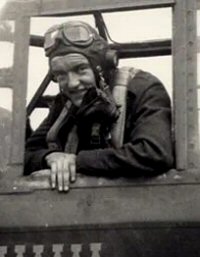  Flt Lt Don Briggs DFM Our estimated value of this signature : £45 Died : 2018 | Flt Lt Don Briggs DFM Don Briggs spent two years at RAF Halton qualifying as an engine fitter before serving on RAF flying units until he volunteered in December 1943 for the new aircrew trade of Flight Engineer. After a period of training he joined No.156 Squadron equipped with the Lancaster. The unit was part of Bomber Command's Pathfinder Force. The flight engineer was the pilot's mate who managed the engines, fuel systems and the ancillary equipment. He teamed up with Flying Officer Bill Neale and they were to complete sixty-two bombing operations together. Their first sortie was on June 11th, 1944 when Bomber Command was attacking targets in support of the Allied landings in Normandy. Railway marshalling yards, supply dumps and construction sites for the V-1 flying bombs and storage sites for the V-2 rocket were their primary targets. By late August, Bomber Command resumed its campaign against the industrial cities in Germany and Briggs attacked Russelheim, Kiel, Stettin and cities in the Ruhr. His crew marked targets with flares to allow the main force to mount accurate attacks. After the war, Briggs flew long-range transport sorties in York aircraft (based on the Lancaster) before spending three years at the Empire Test Pilot's School at Farnborough. In July 1951 he started training as a pilot and, after converting to jets, he joined the newly-formed No.10 Squadron to fly the twin-engine Canberra bomber. In August 1955 he trained on the first of the RAF's V-bombers, the Valiant. He joined the first squadron, No.138, and a year later he transferred to No.49 Squadron, which was being formed for the task of conducting the nuclear weapons trials in the Pacific. Operation Grapple was mounted in 1957 to test Britain's first thermonuclear megaton weapon, the Hydrogen Bomb. The site chosen for the test was Malden Island 400 miles south of Christmas Island in the South Pacific. Briggs was the second pilot in the crew of Squadron Leader Arthur Steele. They flew their Valiant bomber to the newly constructed airfield on March 18, 1957 and began a period of intensive training. On May 15th, No.49 Sqn's commanding officer, Wing Commander Ken Hubbard, dropped the first weapon successfully. For the second drop on May 31st, Steele, Briggs and their crew flew the reserve aircraft and for the third and final test, they were tasked for the sortie. On June 19th, they took off and climbed to 45,000 feet, and carried out a practice run over the target before clearance to drop the bomb was given. Fifty seconds after release, the bomb exploded at the pre-determined height of 8,000 feet. Steele and Briggs had erected the anti-flash screens in the cockpit of their aircraft before making a precisely executed turn away from the explosion and before the shock wave was felt in the aircraft. The drop was completely successful. A few days after their flight, the squadron returned to Wittering. By the end of the year, Briggs had completed a Valiant captain's course and he transferred to No.138 Squadron where he spent the next three years. This was followed by almost three years as a pilot instructor on Valiants and it was during this period he also converted to the Victor bomber. In 1964 he trained as a flying instructor and spent three years instructing trainee pilots at an RAF flying school near Newark. In January 1967 he converted to the third of the RAF's V-bombers, the Vulcan, and was to spend the next five years as an instructor on the iconic delta-wing aircraft before joining No 9 Squadron shortly before it moved to its new base in Cyprus. After 34 years service, he retired at the end of 1973. There were 88 Vulcan 2s produced and Briggs flew 57 of them during his seven years with the force. He spent 15 years at the Oxford Air Training School training pupils to become commercial airline pilots. He retired aged 65 when he joined the RAF Microlight Association at Halton where his RAF career had begun and where he became the chief flying instructor. Finally, at the age of 84 he decided to finish his flying career having flown 71 different types of aircraft and gliders. He died in July 2018. |
  Sergeant Raymond E. Grayston Our estimated value of this signature : £65 Died : 2010 | Sergeant Raymond E. Grayston Ray Grayston had been serving in 50 Squadron when he was posted to 617 Squadron in March 1943. The flight engineer of Les Knights Lancaster AJ-N, they attacked and successfully breached the Eder Dam, Ray was shot down on 16th September 1943, and was taken to Stalag Luft III as a POW. Sadly, we have learned that Ray Grayston passed away on 15th April 2010. |
  Flt Lt George Harris DFC Our estimated value of this signature : £50 Died : 2018 | Flt Lt George Harris DFC George Harris went to an Operational Training Unit flying old Wellingtons and, on his last flight of the course, a night practice bombing and fighter affiliation trip, suffered an engine fire just after take-off. He came down in darkness in Sherwood Forest and came to in hospital. A wooden propeller had shattered on impact, sheared through the airframe and his seat, taking a slice out of his back and leaving him with several broken ribs, a punctured lung and lacerated kidney. His parents were warned he may not survive but within six weeks he was flying again, back in Wellingtons, then on Halifaxes, before finally moving on to Lancasters and a posting, along with three other crews, to No 1 Group 101 Squadron in Ludford Magna, Lincolnshire. It had taken three years of training and frustration and now he and his crew were replacements for those recently killed in action. The squadron's Lancasters were equipped with the radio jamming system known as the Airborne Cigar, or ABC. It covered the frequencies used by the Luftwaffe but its presence also deprived them of a vital navigational aid which heightened their vulnerability. On average only one in four crews survived and that was the case with those Harris had been posted with: all were lost, the first on its first operation. His missions ranged from major night attacks on Germany and tactical support attacks on German troop strongholds, communication centres, V-1 flying bomb sites and airfields in France and the Low Countries. He was subsequently invited to take his crew to the Pathfinder Force but turned down the opportunity as it would have meant leaving behind his German-speaking Special Operator, which he felt was wrong. Anyway, he regarded 101 as a very special squadron with huge spirit and said the Lancaster was 'a simply splendid' aircraft to fly. Among his hair-raising exploits were coping with another engine fire – resulting in an emergency landing on three engines with a full bomb load – braving electric storms which could throw the Lancasters around like corks and dodging the searchlights above enemy territory. On one occasion, returning from a night raid on Brunswick on 12th August 1944, the searchlights locked on him and he desperately performed a violent corkscrew manoeuvre to escape the beams. Failing to shake them off, he dived at full bore with a full bomb load, descending so rapidly the navigator said he had exceeded the plane's reported break-up speed. The slipstream and engine noise was like a banshee, he recalled. Miraculously they remained in one piece to tell the tale and, after debrief, took an idyllic stroll back to their quarters as the sun rose and the dawn chorus began. That night 24 of their men did not return and 101 maintained its reputation as a 'chop' squadron. Reflecting on the end of his operational tour with his Lancaster Z-Zebra, he said he felt strangely flat, rather old and empty but had gained much, including the sheer freedom and joy of flying, the magic of cloud hopping and, as a flight commander, the responsibility for life and death decisions over other men. His award of the DFC, for valour in the face of the enemy, was announced in February 1945. Seventy years later he received the Legion D'honneur for his part in the operations to liberate Caen. After the war he completed a BA in modern languages and economics at St John's College, Cambridge and took posts at Liverpool and Glasgow universities before moving to the Mobil Oil Company in 1954. Four years later he joined PA Management Consultants and in 1967 established executive search company Canny Bowen and Associates, the UK arm of the US firm Canny Bowen, undertaking searches at chairman, managing director and director level for major British and international companies. George died on 17th January 2018 in Tunbridge Wells, aged 95. |
 Flt Eng William (Bill) Higgins Our estimated value of this signature : £20 | Flt Eng William (Bill) Higgins Flt Eng William (Bill) Higgins Born in Plymouth, Devon, joined the RAF at the age of 17 and became a flight engineer on Lancaster with 195 Squadron.in October 1944. whihc flew from RAF Wratting Common. Bill Higgins flew on most missions that 195 Squadorn took part in including there last mission on the 24th April 1945 the bombing of Railway facilites at Bad Oldesloe. and also took part in the supply drops to the Dutch at The Hague on the 7th May 1945. After the war end Bill transferred to air traffic control in Occupied Germany durign the Belrin Airtlift. and after leaving the RAF, Joined the civil servcie and worked onRadar, including the intallation of radar on HMS Cavalier in Singapore. |
  Warrant Officer Norman Jackson VC Our estimated value of this signature : £80 Died : 1994 | Warrant Officer Norman Jackson VC Norman Jackson joined 106 Squadron as a flight engineer, and his 30th operational raid earned him the Victoria Cross. While climbing out of the target area over Schweinfurt, his Lancaster was hit by an enemy night-fighter and the inner starboard engine set on fire. Although injured by shrapnel he jettisoned the pilots escape hatch and climbed out on to the wing clutching a fire extinguisher, his parachute spilling out as he went. He succeeded in putting out the fire just as the night-fighter made a second attack, this time forcing the crew to bale out. Norman was swept away with his parachute starting to burn but somehow survived the fall to spend 10 months as a POW in a German hospital. Sadly, Norman Jackson died on 26th March 1994. |
  Squadron Leader George L. Johnson DFM Our estimated value of this signature : £45 Died : 2022 | Squadron Leader George L. Johnson DFM Joining the RAF in 1940, George Johnson served with 97 Squadron before joining 617 Squadron. Bomb aimer on American Joe McCarthys Lancaster AJ-T, they attacked the Sorpe Dam, for which he was awarded the DFM. Commissioned a few months later, George retired from the RAF in 1962. The last surviving Dambuster, he died aged 101 on 7th December 2022. |
 Gunnery Leader Sgt Alistair Lamb Our estimated value of this signature : £35 | Gunnery Leader Sgt Alistair Lamb Alistair Lamb, born in Stirling, Scotland, joined the Royal Air Force in March 1944 and went to No.7 Gunnery School at Stormydown in Wales. In August 1944 he went to Market Harborough and started training in Ansons before moving on to Wellingtons. Alistair went to H1654 heavy conversion unit at Wigsley flying in Stirlings and Lancasters. In March he joined No.15 Squadron at Mildenhall and participated in amongst other operations Operation Manna dropping food supplies to the Dutch, on the 30th April 1945 over Rotterdam, 2nd May 1945 over The Hague and 7th May 1945 at Valkenburg. Sgt Alistair lamb and the rest of the crew also took part in Operation Harken Project, photography of U-Boat Pens at Farge. After the war Sgt Alistair Lamb stayed with 15 Squadron at RAF Wyton on Lincolns until August 1947 when he left the RAF and joined the Civil Service. Alistair Lamb still lives in his home town of Stirling. |
Corporal Kenneth Lucas Our estimated value of this signature : £30 Died : 2011 | Corporal Kenneth Lucas Ken Lucas joined the RAF in June 1940, and trained as ground crew for bomber Command. He was sent first to 49 Squadron at RAF Scampton, before transferring to 617 Squadron upon its formation, Involved in all the major servicing of the aircraft before the raid including fitting the motors that drove the belt that spun the bomb, and attaching the critical lamps to the underside of the aircraft. Sadly, Ken Lucas passed away in January 2011. |
  Flight Sergeant Grant S McDonald RCAF Our estimated value of this signature : £45 Died : 2012 | Flight Sergeant Grant S McDonald RCAF Grant McDonald was the rear gunner on Lancaster AJ-F flown by Ken Brown. On the way to the Ruhr, the gunners shot up and damaged three trains in an eventful trip before reaching the Sorpe Dam. Sadly, we have learned that Grant S McDonald passed away in May 2012. |
  Flight Lieutenant Bill Reid VC Our estimated value of this signature : £80 Died : 2001 | Flight Lieutenant Bill Reid VC Volunteering for RAF aircrew in 1940, Bill Reid learned to fly in California, training on the Stearman, Vultee and Harvard. After gaining his pilots wings back in England he flew Wellingtons before moving on to Lancasters in 1943. On the night of Nov 3rd 1943, his Lancaster suffered two severe attacks from Luftwaffe night fighters, badly wounding Reid, killing his navigator and radio operator, and severely damaging the aircraft. Bill flew on 200 miles to accurately bomb the target and get his aircraft home. For this act of outstanding courage and determination he was awarded the Victoria Cross. Died 28th November 2001. |
  Sergeant Frederick E. Sutherland RCAF Our estimated value of this signature : £45 Died : 2019 | Sergeant Frederick E. Sutherland RCAF Doc Sutherland was the front gunner on Les Knights Lancaster AJ-N that went to the Mohne Dam, and then successfully attacked and breached the Eder Dam. Shot down four months later, he managed to evade capture and escape back to England with the help of the Resistance movements, returning through Holland, France and Spain. He died on 21st of January 2019. |
 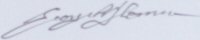 Sgt George B Thomson Our estimated value of this signature : £40 | Sgt George B Thomson George Thomson was trained on Stirlings and Wellingtons before converting to Lancasters and joining No.15 Sqn. He flew most of his missions on Lancaster LS-P, including missions to Stettin and Paris rail yards. While on the Paris mission, LS-M developed engine problems and was left behind by the rest of the squadron. Luckily, two P-38 Lightnings high above spotted the the struggling Lancaster and came down to escort the bomber back to base at Mildenhall. On the night of 12th September 1944, George was Navigator on Lancaster NF958 (LS-M) of No.15 Sqn, his usual aircraft LS-P grounded with engine trouble. This was to be his first and last mission on this aircraft as it was lost in the skies above Mannheim when it was attacked by the Messerschmitt Bf.110G-2 of Ofw Ludwig Schmidt of II/NGJ 6. Five of the seven crew of the aircraft, including George, managed to escape from the burning aircraft but two did not manage to escape the inferno. The aircraft came down in the vicinity of the railway station in Wieblingen, south of Mannheim. Having escaped the aircraft, he did not however manage to evade the enemy, and he was taken into captivity until the end of the war.First Op : I suppose all aircrew looked forward to their first operational flight with some trepidation, but in my own case I didn't have time to think about it, as this tale will tell. Having completed my navigation training I moved on to No. 11 O.T.U at Westcott, in December 1943, flying in Wellingtons and where I crewed up; from there it was on to 1657 Conversion Unit at Stradishall, where we flew Stirlings, then to NO.3 L.F.S. at Feltwell where we converted to Lancasters. Three rounds of circuits and bumps and one 'Bullseye' and then posted to Mildenhall in June 1944 to join XV Squadron. Arriving at Mildenhall, on my first day I reported to the Navigation Office. The Navigation Leader, F/Lt. Jack Fabian, a New Zealander, greeted me warmly enough, but was somewhat perplexed by the fact that he had another Scottish Navigator to deal with. As he said, there were already Scots known as 'Jock', 'Haggis', and 'Bagpipes', so henceforth he would call me 'Tommy'. As I was leaving his Office, he threw a fastball at me - 'Would I like to do an Op that night with a crew whose navigator had gone sick?' I was somewhat nonplussed and replied to the effect that I would have preferred to do my first Op with my own crew. To my surprise he simply said - 'That's O.K. Tommy, there will be plenty opportunities later on. 'Four days later we did a loaded climb and for some reason or another thought that we would perhaps do one or two more exercises before seeing our names on the Battle Order. Next day there seemed to be nothing on so we went our individual ways, with the Flight Engineer and myself deciding that we would go to the Camp Cinema that night. We were settled in our seats, and the big movie had just started - 'The Picture of Dorian Grey' - when a message flashed up on the screen for Sgts Howarth and Thomson to report to the Briefing Room immediately. We hurriedly left the Cinema and made our way to the Briefing Room, wondering what this was all about, when we met the aircrews coming out and getting aboard transport to be taken to their aircraft. Jack Fabian was at the door, and he handed me a Navigations Bag with the comment - You'll fmd everything in there; just follow the plane in front until you get sorted out.' We got transported out to the aircraft where the other members of the crew were already aboard, and I was still unpacking my bag as we trundled to the runway, taking off at 22.57. By the time we were in the air I had unfolded the chart and found where the target was - a 'P' Plane site at L Hey - the route there and back had already been plotted so, in effect, I was being spoon fed for my first Op. We encountered slight flak on route and were attacked by a Ju88 over the target, forcing the Bomb Aimer to ask the Pilot to go round again. On the second run in to the target another aircraft crossed our path, again forcing a re-run as before, but eventually having unloaded our bombs we headed back home, landing at base two and a half hours after take-off. To my surprise neither I nor the Flight Engineer were challenged as to why we had been at the Cinema, nor did we get a satisfactory explanation from the other crew members as to why they had not made contact with us after seeing the Battle Order for that night. Four nights later we were on our second Op to another 'P' Plane site, encountering three attacks by Me110s, one of which was damaged by our Rear Gunner. From then on, we never met another fighter until our twentieth Op on 12th September 1944, when we were attacked twice as we turned on to the last leg to the target, Frankfurt. The second attack caused severe damage to the aircraft and set part of the incendiary load alight, forcing us to abandon the plane, and when we bailed out the Flight Engineer and I landed in the same field, but we didnt get to the Cinema that night! Caught Napping It was our twentieth operation, the target was Frankfurt and the date was 12th September 1944. I was flying as Navigator in Lancaster LS-M (NF 958), the other members of the crew being FIO N.R. Overend (pilot) a New Zealander; J.D. Jones (Bomb Aimer); R.E. Kendall (Wireless Operator); RJ. Howarth (Flight Engineer); H. Beverton (Mid-upper Gunner) and 1. Spagatner (Rear Gunner). We flew low level across France, only starting our climb when we crossed the German border. At 22.45 as we turned on to the last leg into the target there was a cry of 'Port Go' from the Rear gunner; immediately we plunged into that sickening corkscrew known to all Bomber aircrew, and as we levelled out there was an almighty bang from underneath the Wireless Operators position. Flames rapidly broke through into the fuselage and we realised that we had been hit in the bomb bay, and the incendiary load was alight. The pilot struggled with the controls for a moment or two but, as the flames began to spread across the port wing, he gave the order to bail-out. B.J., the Flight Engineer, went first through the nose hatch, followed by myself, then the Bomb Aimer, while the two Gunners exited through the rear door. I estimate that we baled out at around 12,000 feet, and in the darkness of the night it seemed a long way down. Shortly after we had escaped the aircraft blew up, throwing out the Wireless Operator, who remembers nothing of that incident, and killing the Pilot. Hitting the ground, I realised that there was another parachutist on the corner of the field in which I had landed, and making my way to him found it to be B.J. our Flight Engineer. Neither of us were injured in any way, so burying our chutes we decided to make tracks and get as far away as we could from the scene of our landing. That night we simply headed in a southwest direction, keeping to fields and avoiding any roads. At one point we came to a large enclosed area, surrounded by high fencing, which we had to go around. Eventually, as dawn approached we found ourselves on the bank of a fast flowing river - there was a bridge downstream, with the occasional vehicle crossing it. The heavily wooded area on the other bank looked most inviting but prudence dictated that we should stay where we were, as the chances of being spotted as we crossed the bridge were too high for our liking. As daylight came we could see that we were on the edge of a farm, the buildings of which could be seen some two hundred yards from were we were lying in long grass - fortunately the steep bank on which we lay hid us from the farm but we kept a watchful eye in case anyone came in our direction. The day passed slowly. We had one Escape Kit between the two of us - B.J. had left his in the aircraft - so we had a couple of Horlicks tablets and risked sharing a cigarette, being careful to blow the smoke into the long grass. It proved to be a very long day, as we lay there waiting for darkness to fall. As night came so too did the rain. And how it rained! We made our way to the bridge and got across it without any difficulty, then dived into the woods we had seen. And still it rained; so much so that we were obliged to seek shelter, and there was precious little about. An upturned tin bath, which we came across, when held over our heads provided only token cover, and the noise of the rain falling on it forced us to discard our primitive shelter. A thicker clump of trees provided some relief from the rain and we remained there for much of our second night, only resuming our escape attempt when it got a bit lighter. We were following a main road, while staying within cover of the trees, and there seemed to be only military vehicles passing from time to time. As it got lighter we decided to call a halt and get some rest - in any event, we had had little sleep so far. A clump of low scrub provided enough shelter and so we lay down and went to sleep. It would be difficult to say that we slept well. Periodically, we would waken up and check that there was no one approaching our hideout. The occasional noise of traffic could be heard on the road some distance away - it seemed possible that this was a main route to the south and we took the decision to follow it. We were encouraged to believe that we might yet get out of Germany, and, with luck, get back to Britain. Up to this point the lack of food had not been of great concern. We still had some Horlicks tablets and a chewy bar in the Escape Kit. We also had a fishing line and a hook, but could not imagine us sitting by a stream while we dangled the line in the expectation that we might catch a fish. Some matches, a water bottle and water purification tablets completed our equipment. I had in my possession a pencil, which when broken open revealed a miniature compass, while B.J. being a pipe-smoker had a tobacco pouch, which, he proclaimed had a map inside. Ripping open the pouch, we were somewhat disappointed to find a map of southern France, and we had a long way to go before it would be of any practical use to us. Late that afternoon we decided that it would be safe enough to begin walking, provided we stayed within cover of the woods, so off we set. It was slow progress as we constantly had to be on the alert, and every now and then we would stop and listen for any unwelcome sounds. Gradually, as it got darker within the woods, we edged our way nearer to the road and at times walked along it in an endeavour to cover a greater distance. It was a single track road, and not, as we had imagined, a major thoroughfare; it also ran fairly straight so that we could hear, and even see, any approaching vehicle, whereupon we would dive into cover and remain hidden for a suitable period. We continued walking throughout the night, albeit at a fairly slow pace, and as daylight came we found that we were nearing some open country, with a few buildings set well back from the road. Then we had some good fortune by coming across apple trees growing by the roadside. We hastily filled our pockets and made our way across a field towards an old barn where we though we might find cover for that day. We approached the barn with caution, but it did seem to be disused and sure enough when we got inside we had the firm impression that nobody had been in it for some considerable time. A ladder led up to a hayloft and we settled down there, taking turns to sleep and keep watch. During one of my watch periods I came across a bundle of old newspapers and magazines - I could not read them but I thumbed through the pages looking at the odd photographs. Amazingly, I came across a map, which was part of a an advert for a petrol company, and it covered the very area we were in. It was somewhat rumpled, and torn in places, but I stuffed it into my pocket, feeling sure that it would prove useful in the days that lay ahead. Feeling refreshed, we ate some of the apples and as dusk settled over the countryside we continued on our way. So far as I could judge we had covered some 50 to 60 miles, and were south of Mannheim and heading in the direction of Karlsruhe. We were still making slow progress, keeping to fields, passing through wooded areas, and trying at all times to remain invisible. This night we again experienced rain, and as it got heavier we decided that there was no alternative but to seek shelter yet again. This proved to more difficult than we had expected, but eventually we came to a bridge over an autobahn and took shelter below it at a point as high up from the autobahn as we could find. It proved to be just right for our purpose for, while we could watch the odd vehicle that passed along the road they were unable to detect our presence in the darkness. Thus passed a few miserable hours. As dawn approached we thought it best to get away from this location, so returned to the fields and continued our walk. We were getting a bit blase by this time, and took the decision to continue walking through the day. As events were to prove this was a day we would not forget in a hurry. At one point we could see workers in a distant field, but if they saw us they took no notice. Boldness overcame us and we ventured on to a quiet country road in an endeavour to cover a greater distance. Some miles on our way we spotted a civilian type truck parked by the roadside. There did not appear to be anyone with it so we approached it carefully, possibly thinking that we might be able to use the vehicle to get us further on our way. There was no obvious way that we could have got it started, which led us to abandon the idea of driving off in style, Before leaving the truck, however, we had noticed a packet lying beside the driver's seat; on closer examination we found it to contain two chunks of bread and some sausage. We could not pass up the opportunity to vary our diet a little, and to this day I wonder what the driver thought about his missing lunch, if that is what it was. The decision to keep to the road was almost our downfall, for turning a bend in the road a few miles on, we saw ahead a group of houses on either side of the road, with one or two women and children actually within sight of us - indeed, it seemed that they had observed our approach. What to do? Walk on, we agreed! So, putting on a bold front we walked straight ahead at a steady but not fast pace - we nodded to the women as we passed and kept going. My spine was tingling but we dared not look back. Another bend in the road and we were out of view of the women. Heaving sighs of relief we stepped out a bit faster to get as far away as we could from the hamlet we had passed through. It is perhaps worth mentioning that we had taken the decision not to remove any badges from our uniforms, which meant that we were still wearing our flying badges and our stripes, and yet we had not been recognised. Later in the day we came across a workmans hut by the roadside and as it was deserted we took the decision to rest for a while inside. It stood back a little from the road, and behind it was a thinly spaced wood. A knothole in the wall facing the road gave us the advantage of viewing anyone approaching. Then the unexpected happened. An army vehicle drew up alongside. As we watched, the driver and a woman got down from the cab. Hell! Were they coming to the hut? Fortunately, they passed behind and went into the wood, re-emerging some ten minutes later. The purpose of their visit was all too obvious, and we watched them climb back into the truck and drive off. If they were satisfied, so too were we! That was enough excitement for one day, and certainly more than we had experienced in our travels thus far. To avoid another encounter with any of the local population, we kept to the fields and woods for the remainder of that day, and chose to spend the night as 'babes in the wood' once again. Starting out the next day it was quite apparent that we were suffering from a lack of nourishment. We both felt a bit light headed from time to time and as the day wore on we realised that we needed to find another lorry with a supply of bread and sausage. No such luck, however! Taking it easy, and resting for longer periods in between walking meant that it was going to take longer to get out of Germany than we had imagined. Never mind, just keep going and hope for the best. Later in the day we came across a vast potato field and filled our pockets in preparation for a bean feast that night. We still had a few apples we had gathered earlier in the day and this gave us the prospect of a better repast. The hours of darkness came at last - we were still walking and had returned to a quiet country road on which we saw neither persons nor vehicles. When we came across another hut, again set back a little from the road, we claimed it as our own for the night. There was an added bonus in that this hut contained a stove; ideal for roasting our potatoes, so B.J. foraged for some wood while I went off to find a stream we could hear nearby in order to fill the water bottle. In my wearied state I misjudged the bank and finished ankle deep in the stream. Returning to the hut I took off my shoes and hung my socks above the stove, now alight, and waited for the potatoes to roast. They were excellent, and the apple desert finished off our evening meal. Before settling down to sleep I went out of the hut to relieve myself and to my horror saw flames spouting two or three feet high out of the chimney. A dead giveaway to any passing traffic, so out went the fire and we turned in for our rest. The next morning was sunny and warm. We resumed our trek and by this time I was estimating that we had covered a fair distance although by no means sure where we were having run off the map I had earlier acquired. Still, we were in reasonably good heart and feeling a bit stronger after our meal the night before. Nevertheless we were walking at a slower pace and we took time to rest more often. The result was that we had probably covered little more than a dozen miles during that day. As evening came we found another road heading in what we though would be the right direction - it led us into the outskirts of a town of some size, so far as we could judge in the dark, and we were wondering what to do next when we heard approaching footsteps. Diving into a garden of a house, we hid behind shrubs until the figure passed, then re-emerged to continue on our way, still wondering what action to take. A little further on we spied a railway yard and decided to investigate. Would there be any trains that might take us out of Germany? We never did get the answer to that question as we were suddenly confronted by a uniformed person who took a great interest in us. He spoke to us, obviously asking questions, but as we could not understand a word we just stood our ground and shrugged our shoulders. Bemused perhaps, our questioner eventually lost interest and wandered off. We wasted no time in getting out of that yard and hightailing it down the road with a view to getting as far as we could out of that town, a town we were later to learn was called Rastatt. We walked at a fair pace and when we judged that we were a good few miles out of the town we looked for some place where we could lie up for the rest of the night. There were woods on both sides of the road, but which to choose? We chose to go right and when we were some little distance away from the road we found a hollow under some low scrub, which we settled in for our resting place, and soon we were asleep. I must have slept soundly until I was rudely shaken awake by B.J. who whispered in my ear, 'Look whose coming!' I did look and my heart sank immediately, for there were four German soldiers bearing down on us with rifles and fixed bayonets. There was no chance of escape, and as I looked around I spied an elderly man standing well back watching proceedings - he had in his arm a bundle of wood and it was all too obvious that he had come across us as he searched for wood, and reported us to the military. As events were to prove he had not had far to go to turn us in, for we had selected as our resting place a spot some two hundred yards from a German Army camp, which we had not seen through the trees while it was dark. We had truly been caught napping! We were taken back to this camp two or three officers appeared and scrutinised us at close quarters before removing our shoes, presumably to avoid us making a run for it. We stood there not knowing what would happen next. The most senior officer, or so he appeared, stood looking at us in some amusement. Eventually a truck was brought along, we were invited to get aboard - we had no choice - and we were driven back into the town we had walked through the previous evening. What appeared to be the local county jail was our destination, where we were searched then placed in separate cells. I was surprised that the search they made of us had been carried out in a careless manner, for they had missed my escape kit box, which was by now near empty, and a knife I had in my possession. After about an hour in the cell, the door was opened and an officer and senior N.C.O. entered. The officer stood and looked at me while the N.C.O. snapped 'English?' at me. I do not know what prompted me to say 'No', but that was my reply, whereupon the N.CO. shouted 'American?' Again I answered 'No'. The N.C.O. looked puzzled, but the officer smiled and said in almost faultless English, 'Well if you are not English and not American, what are you?' 'Scottish,' I replied. At this the officer turned and said a few words to the N.C.O. who then left the cell and I was left alone with the officer. Curiously, he did not try to interrogate me. Instead, he explained that he had gone to Oxford University pre-war, which no doubt explained his near perfect English. He did say, however, that an Austrian Regiment had picked us up, and that for me the war was over. A few minutes later the N.C.O. returned bearing a tray with a plate of meat and potatoes on it, together with a mug of coffee, then they left me to enjoy my first real meal in eight days. The following day I met up with B.J. when we were moved to another prison some miles away. I was a little amused to learn that when the German officer and N.C.O. had confronted B.J. in his cell, and asked if he was English he had acknowledged the fact, only to be left alone without anything to eat - it was some hours later before he received some bread, cold meat and coffee. Obviously, being Scottish paid off! Eventually we were taken to Frankfurt and found ourselves in Dulag Luft for interrogation. By this time the attack on Arnhem had taken place and the number of airborne prisoners was such that we were soon moved out to our Prison Camp, Stalag Luft VII in Upper Silesia, which we reached after a train journey occupying several days. At this time we met up with our Bomb Aimer and Wireless Operator, and were more than pleased on arrival at the Camp to find that Spagatner, our Rear Gunner had got there before us. As we were later to have confirmed, the Pilot had indeed been killed in the aircraft, and our Mid-upper Gunner had also been killed, but how and when we never did learn. |
|
Contact Details |
|
Sign Up To Our Newsletter!
This website is owned by Cranston Fine Arts. Torwood House, Torwoodhill Road, Rhu, Helensburgh, Scotland, G848LE Contact: Tel: (+44) (0) 1436 820269. Email: cranstonorders -at- outlook.com |
 |


